Saturday – Home – There is more fair weather cloud today and the temperature is lower than recent days. A Hummingbird Hawkmoth is visiting the Nicotianas outside the back door. It is very difficult to photograph as it moves quickly between flowers before shooting off over the wall. A Red Admiral feeds on a sunflower but is bullied off by a Honey Bee.
The hens are steadfastly refusing to use my new perch. There is a slight wobble to it and that is obviously too much for them Back to the drawing or rather sawing board.
Sunday – Leominster – The sun shines through hazy cloud. The temperature is pleasant at the moments it will warm up. Carrion Crows fly up from The Grange. Yelping gulls fly overhead. Wood Pigeons call from the trees side Grange Court. A constant, higher pitched, screeching of a young gull comes from the roof of The Forbury. This sends the gulls into a frenzy of yelping as they circle the roof. The air high in the sky must be very still as there are numerous slowly expanding vapour trails crisscrossing the sky.
The River Kenwater remains low and clear. The River Lugg seems to have fallen slightly, the gravel patch on the middle of the stream is a little larger. The market is much larger this week, nearly full to capacity. Someone has some beetroot for just a pound a bunch so I purchased a couple.
A small gathering of Pond Skaters is downstream from Ridgemore Bridge but nowhere near the usual numbers. Round Paradise Walk and up The Priory to the churchyard. A few Swifts are overhead. A young gull is on the old school roof begging for food. Bell practice starts at the Priory.
Home – A sort out in the greenhouse. Several containers of no-hoper seedlings are ditched. Some very leggy lettuces are transplanted into a trough. A trough of leeks is planted out into the garden. The soil is utterly dry. A couple of chard and what could be kale also go in with a spare courgette. A couple of watering cans of water are poured onto them. Every greengage I check has been wormed. Hopefully, there are some far from ripe and they will be good.
Wednesday – Home – A strong breeze makes the atmosphere fresher, but it is still warm. A few drops of rain have fallen but nothing to help the drought stricken ground. Another large punnet of blackberries are gathered and there is still hundreds left on the bramble. Some greengages on the tree are becoming soft and ripe and many of them have been unaffected by the Plum Moth. The leeks are struggling. Courgettes are still coming thick and fast, and in one case, very nearly a marrow. A tray of them go out in front the garage doors for people to help themselves.
The weather forecasts are suggesting there may be yet another heatwave. Many fires have caused extensive damage in different areas of the country. Fires on the continent have been devastating. The Far East has been hit by typhoons and inundated by downpours that have caused extensive flooding. El Niño has yet to peak so many more extreme weather can be expected. At last, the climate deniers are having to concede that climate change is real and happening.
Thursday – Croft – Dark clouds are coming from the west. A stiff breeze rustles the trees. Car parking spaces under the trees has been roped off as the drought has resulted in branches falling. Off down the Fish Pool Valley. As everywhere Brambles are heavy with blackberries. Unbellifers, mainly Ground Elder, are some of the few plants still flowering, most are in seed. Various insects are feeding on them, including the wonderfully named, Batman Hoverfly, Myathropa florea. The water level in the pools is not as low as one might expect. Over the bridge to the Beech wood. Young warblers move through the trees, they have a lot of yellow on their underparts so may be Wood Warblers, but juveniles are tricky. The ancient hollow Oak has lost many more branches but still has leaves.
Straight up to the top ride. My old legs are not so clever on the surface made awkward by desiccated Beech mast acting like marbles. A Nuthatch calls. From the end of the valley I take a path that runs up the other side. It rises high into the woodland. Blue Tits flit around the trees. A couple of volunteers are putting new way markers on posts along the path, others are using brush cutters to keep the Bracken off the path. Steps lead onto the old woodland pasture where the ancient Oaks still stand. However I keep to the first path. From up here, the trees below on the valley are a magnificent patchwork of various shades of green. A dead tree has a sculptural quality in its broken limbs, another, a Horse Chestnut, is missing its crown yet still had leaves from small branches and a large growth of Dryad’s Saddle bracket fungus.
Beyond a gate across the path is a small stone slab with the inscription: “To the view”. The path continues to wind its way along the hillside. A cronking Raven flies over. Unseen warblers wheep. A Beech and an Oak grow out the side of a long abandoned little quarry.
The path passes another centuries old Oak and them joined a larger track. Another extraordinary Oak, certainly one of the oldest here, is in the field above the carpark. One of its branches is being supported by large sawn tree trunks. Back at the car park it is clear the place is very busy.
Sunday – Leominster – Blue sky, thin high clouds and a blazing sun – again. We are heading for two months without any meaningful rain. The land is parched. Across the Grange to the sound of calling Wood Pigeons. Over Priory Bridge. The River Kenwater looks unchanged from recent weeks. A couple of fish lay in the flow downstream. A pair of Mallard swim and walk in the shallow water. Over Ridgemoor Bridge. Raptors are screaming behind the trees. One lands in the trees across the River Lugg being harassed by a couple of Magpies. It is difficult to see but looks more Sparrowhawk than Common Buzzard.
The market is large, vendors close together, making it difficult to move through. I purchase a couple of corn cobs. Back over Ridgemoor Brook. Pond Skaters are on the water. The River Lugg flows slowly. A Dipper flies past. It stands on a rock downstream, singing. The raptor is on a dead branch and is indeed a young Sparrowhawk. Along Paradise Walk. Bell practice begins. The larger fish is still in the same place below Priory Bridge. Into the churchyard. Chiffchaffs are calling their wheep call.
Home – Another tub of blackberries are gathered. Many more are left – my back can take only so much bending. A tub of greengages are plucked from the tree. Several courgettes are cut off and put out the front for anyone to help themselves. I had dug up the old chard plants that had gone to seed and dumped them in the chicken run. The stripped stalks are now removed for recycling or they may go into our compost bins.
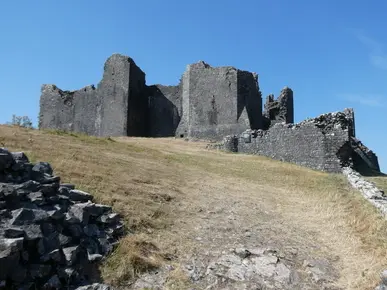
Tuesday – Castell Carreg Cennen – The morning started overcast but is now bright sunshine and getting very hot. This castle is on the western edge of Bannau Brycheiniog, south east of Llandeilo. The rocky outcrop on which the castle is perched is an isolated block of Carboniferous Limestone trapped within two faults which form a part of the Carreg Cennen Disturbance. It is possible there was an Iron Age hill-fort here. The first castle was probably built by Rhys ap Gruffudd, the Lord Rhys in the late 12th century but the first documented reference was in 1248 when mother of Rhys Fachen, the great grandson of the Lord Rhys, Matilda de Braose, granted the castle to the Norman English to spite her son, but before the English took possession of it Rhys captured the castle. In 1277 Edward I took the castle. The Welsh seized the castle 1282 but lost it a year later. The castle was patched up and granted to John Giffard, Baron Giffard of Brimpsfield, Gloucestershire. Rhys ap Maredudd retook the castle in 1287 but again soon lost it. Henry IV took ownership of the castle in 1399. in 1403 Owain Glyndŵr attacked Carreg Cennen, but, although inflicting severe damage to the walls, failed to take the castle. It was defended against Glyndŵr’s forces by Sir John Scudamore of Herefordshire. By the mid 15th century, the castle was in the possession of Gruffudd ap Nicolas and Carreg Cennen became a Lancastrian stronghold during the Wars of the Roses. The Yorkist victory at the Battle of Mortimer’s Cross in 1461 forced Gruffudd’s sons to surrender the castle and the Yorkists subsequently set about slighting the castle. Ownership of the castle passed to the Vaughan and Cawdor families, and from the 18th century it started to attract artists. J. M. W. Turner painted the castle in 1798. The second Earl Cawdor began an extensive renovation in the 19th century, and in 1932 Carreg Cennen was given to the guardianship of the Office of Works.
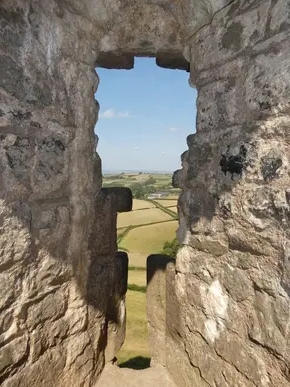
From Castell farm, a track rises to the hilltop and the castle. The mighty grey stone walls look out in every direction. A bridge, once a drawbridge, crosses a deep gully. Within the castle, to the north side, limestone rocks rise out of the hilltop and the walls rise on top. In other places the walls drop deep into the hill creating large rooms. Swallows sweep overhead. Steps lead down to a dark passge which eventually leads to a cave deep in the limestone. I descend some way before sense takes hold. There is no lighting apart from my phone torch and the stone floor is very uneven and damp. My legs are simply not good enough to risk going further. Palaeolithic remains have been found here. It is said that King Arthur and his knights lay sleeping in another of the caves below the castle awaiting the call to arise again.
Low walls mark the outer wards. Within one is a limekiln. To the east is a valley with steep hillsides of sheep and woodland. To the south of the castle, cliffs drop away 300 feet to almost dry Afon Cennen. Raptors shriek from the wood below. Descending the track, the sources of the shrieks appear, a pair of Red Kites. Back at the farm is a long house full of old agricultural equipment and twittering Swallows.
Ammanford/Rhydaman – On the way to Ammanford, a woman, several old boys who looked like former farmers and a very excited border collie are trying to catch an errant black sheep.
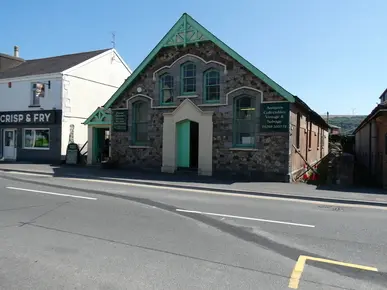
The town of “Cross Inn”, which developed in the 19th century through the tinplate and anthracite trade, became known as “Ammanford” on November 20th 1880. Along the High Street which is mainly 20th century housing. The Gellimanwydd Chapel, also known as the Christian Temple, is an Independent (Congregationalist) chapel. Over the door is inscribed “Adnewy Ddwyd”. A plaque states “This Christian Temple was built in AD 1782, was rebuilt in 1836 and was enlarged to is present form 1865”. It is surrounded by a large graveyard. Stryd Y Neuadd, Hall Street runs behind the chapel on the other side of the street is an extension of the cemetery. The old map shows the Ivorites hall. The Ivorites were the “Philanthropic Order of True Ivorites, St David’s Unity, Friendly Society”, established in Wrexham in 1836 by Thomas Robert Jones (“Gwerfulyn”, 1802-1856) and it was the only Working Men’s Society which was exclusively Welsh. The Ivorites were named after Ifor Hael (Ivor the Generous) who had been the patron of Dafydd ap Gwilym (David son of William), the 14th century poet. It is not clear where this hall stood. Where it seems to have been is a modern building whose windows are tightly shuttered.
Hall Street turns into a pedestrian precinct, Quay Street, of national chain stores, charity shops and cafés. There is a butchers and the Post Office of 1925 which is still operating but the building is in poor condition. The precinct comes to a junction of High Street, College Street and Wind Street, The Square. The Cross Inn, after which the settlement was originally named, is dated 1860. A mural of 2002 is on the wall celebrating the centenary of the Lions Club. The bank built in 1908-9, probably by R L Roberts, is closed. Up College Street is a long parade and an arcade on red brick with yellow dressings. The Arcade is on the site of the Cross Inn stables. The stables were demolished in 1897-98 to make way for the arcade, designed by Henry Herbert, which opened in 1899. The shops in the arcade are cafés, vapes, beauty and empty.
A small ginnel in Wind Street leads to Ammanford Park which had tennis courts, bowling green and a cricket club as well as a children’s play area. The park was created in the early 20th century from a 10 acre agricultural field called “Cae Drud” belonging to Tirydail farm. Further along Wind Street is a former school, now an antiques centre. Opposite is St Michael’s Church, inevitably locked. It was built in 1885 built on land donated by Lord Dynevor. A Yew tree is in a bad way, dropping branches. Next to the church is Ammanford Miners Welfare Club. It has ornate gates funded, according to a plaque, by the “Bewys New Mine Safety Committee”. Behind is the Glowyr Theatre, built in 1935 by J Owen Parry as a cinema. Across the road is the Wesleyan Methodist chapel. Lloyd Street turns into Baptist Lane and the Ebenezer Baptist church, built 1849 and rebuilt 1877.
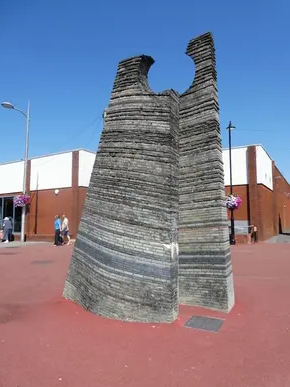
Into the Ammanford Relief Road and a small retail area. The road crosses Garnant and Brynamman branch line heading to the site of the Gwaun-Cae-Gurwen Colliery. The line stopped passenger traffic in 1958 and the line is currently mothballed. Across Heol Breuillet is the River Amman, running low, weedy and green. On the far side of the River is Betws, but I head back towards High Street. Onto Quay Street where there is a miners’ memorial by Howard Bowcott. It is made of layers of sandstone and slate and is inscribed with poetry by Einir Jones and the names of local miners who lost their lives in the pits. It was erected in 2006.
Wednesday – Home – The heat rises day by day. Watering the tomatoes is a daily chore. The courgettes get watered every other day and the greenhouse is checked before watering, the tomatoes there are watered twice a week, other plants every couple of days.
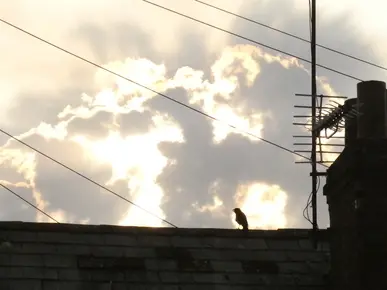
In the evening there is a partial eclipse of the sun. The totality sweeps down from Iceland and across Spain, but here it is around 90% coverage. Of course, from the garden the sun is pretty much completely obscured by a large dark cloud. I get glimpses of a partially covered sun but at its maximum the cloud covers it completely…
Thursday – Home – The morning starts out warm and the temperature continues to rise. Forecasters expect this to be the hottest day of the year. Kay is travelling back from Brighton by train. There are all sorts of warning about cancellations because of fires by the tracks and distortions of the rails. In the event I have to collect her from Shrub Hill, Worcester where the train terminated instead of Foregate. The distance between the stations is reasonable in normal weather but the temperature is now around 38°C!
For rain, for rain the parched lands cry,
Reproachful to the cloudless sky.
The hot white fields in light are blinking,
The rivers in their beds are shrinking. Francis William Bourdillon
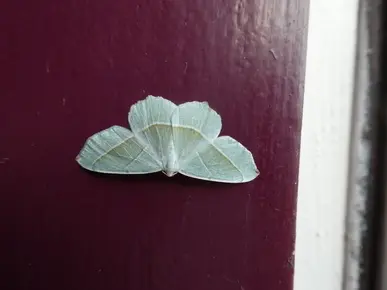
A Light Emerald moth, Campaea margaritata, is on the front door. I recently noticed the deck of the footbridge over the railway to Butts Bridge has been removed. No-one seems to be working on it, so who knows when it will be open again. Considering it is a National Footpath, the delays are annoying.
Friday – Home – Another torrid night with the temperature still over 30°C as darkness falls. It is supposed to become cooler by the weekend but there still is no rain in the forecast. The morning is fairly cloudy and there is a very brief splash of rain. A moth flies onto a piece of fence but it is so tatty that I cannot identify it. A dozen figs are harvested along with a couple of pounds of damsons.
Wild fires are breaking out in many places, especially here in the West Midlands. Fires started in grassland, by arson it seems in a number of cases, have spread to homes in Stourbridge, Stoke-on-Trent, Coventry and Birmingham. Locally, a serious fire has burned buildings in Eaton Bishop and the recent fire on Hanter Hill has been seen smouldering again. Overnight there was a strong smell of smoke across the county, thought to originate from a major fire on Gwastedyn Hill near Rhayader in Powys.
Saturday – Home – It seems weather forecasts have been promising cooler temperatures time after time and yet it remains hot. At least they are not suggesting the drought will end any time soon. The temperature rises throughout the day. The sky is clear and there is hardly any air movement.
Some years ago we made a two section leaf mould container out of wood and wire mesh. It has now come to the end of its days. I thought about making a new one but decided that simply purchasing a couple of wire compost cages was certainly easier if not cheaper. A few days ago last year’s leaves were dug out into a “hippo bag”, they are well on the way to making good leaf mould. The space in the orchard bank needs a little enlarging and the new cages assembled and put in place. It is digging digging the leaf mould back out of the bag and into one of the cages that finishes me off! However, we are pleased with the result.
Tomatoes are ripening quickly. Courgettes have slowed down. There are beans to be picked. In the late afternoon Jackdaws are making a cacophony as they chase between the Horse Chestnut and Ash trees. Despite my looking carefully, I can see nothing that has set them off.
Sunday – Leominster – Hardly any blue sky shows through the layer of high cloud. The air is pleasantly cooler than recent weeks. Wood Pigeons are noisy and active, chasing each other around. Apples are falling from the tree overhanging the garden of The Bell pub; Jackdaws are feasting on them. Onto The Grange. Historians have noted that there are rows of circular patches where the drought has coloured the grass even paler than the rest. It is possible that these are large post holes for the tithe barn that stood on the site. Priory tenants paid their tithes here in corn and other produce. The barn was left standing when most of the priory buildings were demolished by royal decree in 1539. But in 1594 the building was destroyed by fire after reputedly being hit by a comet. One of the biggest timber structures of its era, it burnt for 15 days so thick and so many were its massive oak timbers. Into Pinsley Road. A sizable flock of Blue and Long-tailed Tits dashes between bushes, squeaking excitedly. A juvenile gull squawks on the old school roof. Over Priory Bridge. Blackberries are coming into an end on large bramble patch on the far side of the bridge. A Wren ticks like a machine gun from the hedge.
Into Mill Street. By the railway crossing, the replacement for the tubular steel fencing that was destroyed by a lorry some years ago has again been badly mangled by a vehicle hitting it. Onto the track round to the market. The young Sparrowhawk is calling again from the same dead branch as last week. The gravel bank in the middle of the River Lugg is getting larger week by week as the water level falls.
The market is smaller and less busy than last week. Back along the track towards Mill Street. The Sparrowhawk is flying around, still screeching. There are far more Pond Skaters on the river below Ridgemore Bridge. On Priory Bridge is a lad with his fishing rod who reckons he has just lost a three and a half pound trout.
Home – A start is made to a general tidying of the vegetable beds. The failed peas are removed and some weeding is done. The dwarf French beans are completely dried out. The climbing beans are poor but a few meals can be gathered. The leeks are watered and a couple replanted. Altogether not a great state! However, a good number of tomatoes are harvested and, although slowing down, there are still courgettes. Greengages and pears are still ripening, but it looks like, yet again, the plum crop will be ruined by ring mould.
There are young Blackbirds and Robins everywhere. Hoppy the Jackdaw is not looking good. He may have been attacked by something. I try to feed him a hard boiled egg but he is disinterested. The tatty moth is on the inside of the back door window pane and proves to be a Yellow Underwing.
Tuesday – Home – The “meadow” is mown after several sessions of pulling out the rampant Black Knapweed. I first reduce the height with the strimmer then pass the mower over. What was, some years ago, a reasonably flat lawn is now very lumpy. There is a decent amount of hay, but being full of seed I do not put it into the compost as it does not get hot enough. Hence, the hay is spread around the orchard area. The first Herefordshire Russet apples are beginning to fall. A Chiffchaff makes a half-hearted attempt at its song. A couple of dozen House Martins, twittering continuously, are feeding overhead whilst drifting southwards.
It is cooler, 24°C but still muggy. A few minutes work soon results in being soaked in sweat. A wind rises during the afternoon and clouds threaten rain – hopefully. Blackbirds inspect the newly exposed soil and grass on the “meadow”. They then return to flicking over the leaf little. Small grapes on the vine over the patio are ripening but unevenly. The little bunches have a mixture of dark purple grapes and green, unripe, ones.
Wednesday – Leominster – After dawn, strange thin stripes of cloud are high in the sky. They are being feathered by high altitude wind. Later cumulus clouds move in on a brisk wind. It is still warm. It has been some days since any Swifts have been seen. Into Pinsley Mill. Track-side plants all look dry and withered, even the Stinging Nettles. There is still a hint of pink from the Rosebay Willowherbs. A Red Admiral lands on the tarmac of the path, its colours faded.
Into the Millennium orchard. A fair number of unripe cider apples have fallen. Tom Putt apples are turning red. The Park is sadly an overgrown mess of dead Black Knapweeds and umbellifers and sprawling patches of Stinging Nettles. Blackthorns by the railway have very heavy crops of sloes very near ripe. Elders have heavy bunches of purple-black berries hanging down and beginning to shrivel; their leaves are already turning brown. The River Kenwater is clear and shallow.
Into the churchyard. Numerous Grey Squirrels are bouncing around the grass. Robins sing fitfully. A Magpie chatters.
Home – Another punnet of tomatoes is gathered and yet another courgette. There was a small amount of rain in night, nowhere near enough to leave the soil damp. Hoppy has not been seen for a couple of days, maybe s/he has found a garden with a better menu or has gone off to the Great Clattering (the collective name for Jackdaws apparently) in the sky.
Thursday – Canwood – We visit Canwood Gallery and Sculpture Park in the Woolhope Hills. The site consists of several fields of sculptures and a two storey gallery. The gallery explains its background: “In the 1970s, Herefordshire farmer Stephen Dale faced a life-threatening battle with leukaemia. During his treatment at St Bartholomew’s Hospital in London, he found solace and inspiration in the art at the Tate Gallery, particularly Carl Andre’s controversial brick installation. This profound experience ignited Stephen’s passion for art and his desire to give back. Upon retirement, he established Canwood Gallery to share the inspiring and healing qualities of art with others.” The gallery is in rollings hills of sadly yellow, desiccated fields.
The gallery contains a number of exhibitions, including a Carl Andre piece of two rows of black bricks, Peter Sellers photographs, a Tracy Emin piece and art and other media from contemporary artists. The outdoor artwork is often monumental. Across one field is the 2026 Earth Photo exhibition exploring our changing world, often for the worse.
Swallows feed fledglings sitting on a dead branch. Common Buzzards mew as they soar overhead. A large sheep ambles through the dead grass.
Sunday – Leominster – The sun blazes out of a cloudless sky, another hot day is promised. Rain had also been promised over the past week but we have seen very little. Across the car park. Robins, Wood Pigeons, Jackdaws, Collared Doves and Dunnocks call and sing. Down to Priory Bridge. The River Kenwater looks unchanged, clear and shallow. Gnats dance above the water in the shafts of sunlight. Gulls yelp overhead.
Along Mill Street. A steel container restroom for road maintenance has appeared in the lay-by before the track to Ridgemore Brook Bridge. Yet more Robins are singing in the trees.
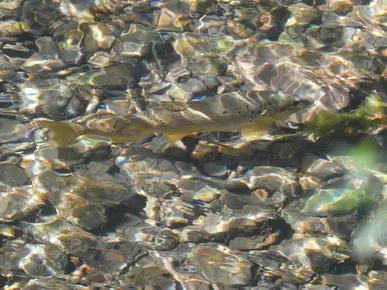
The market is an average size, all the usual junk. Back to Mill Street. Like the Kenwater, the River Lugg is clear and shallow. A Dipper flies under Ridgemore Bridge and off downstream. Into Paradise Walk. A Brown Trout ripples in the river flow. Another Dipper flies downstream. Back up The Priory to The Grange. The bells of the Minster toll the hour then the call to prayer. Beech trees in the Information Centre grounds are heavy with mast.
Home – Over a kilo and a half of grapes have been harvested from the patio vine. They are all small and turned into grape jelly. The tomato crop will soon be a glut and preserving them will be necessary.
Thursday – Home – We have been at home since Monday as the decking outside the back door is replaced. The carpenter does an excellent job, building a framework of considerable strength and then laying the boards. Hopefully another job we will not have to do again.
Dawn arrives but the sky darkens instead. By 7:00 a thunderstorm arrives from the south and torrential rain starts to fall – the first meaningful rain for over two months.
Leominster – Early afternoon and the sky is still overcast. A breeze makes it feel fresh and cool. There are a few unblemished apples on the ground underneath the tree at the foot of the ginnel which is still closed. Into Pinsley Mill. A Red Kite soars towards the River Lugg.
Into the orchard. Tom Putt cider apples are beginning to fall. I collect some sloes in the park, although the amount I pick seems to have very little impact on the extensive purple-black berries on the bushes. This morning’s rain does not seem to have had much effect on the water level of the River Kenwater (the monitoring site shows there was a short rise in the level at 6:00 this morning before it fell back again). Into the churchyard. Rabbits are feeding close to the eastern edge of the churchyard within easy escaping distance of the nettle beds. A scratchy, rattling noise comes from Grey Squirrels chasing around the trunk of a Wellingtonia. It starts to rain.
Home – Water butts are beginning to fill. The soil is finally wet, much to the delight of the leeks which are standing upright. In the early evening a thunderstorm rolls through moving very slowly northwards.
Friday – Home – Last night a full moon, the “Sturgeon Moon” apparently, shines behind a mottled mass of cirrocumulus clouds. There was a near full eclipse just before dawn but the moon is so low in the sky I would have to walk somewhere that a clear view of the western horizon is possible, so I stay in bed.
A Blackcap is singing in the garden. The hens seem to be laying slightly more irregularly. I start the arduous task of moving the pots back onto the new decking. They have had a decent amount of rain so are just a bit heavier. Rain and distant thunder return in the late afternoon.
Bodenham Lake – The sun shines although there is plenty of cloud, high cirrostratus clouds overhead, larger cumulus ones to the south. A cackling skein of Canada Geese fly in from the north. Several young Chiffchaffs fly across the road into the garden of Bodenham Hall. A Nuthatch calls in the car park. A Ring-necked Pheasant croaks in the field bordering the village.
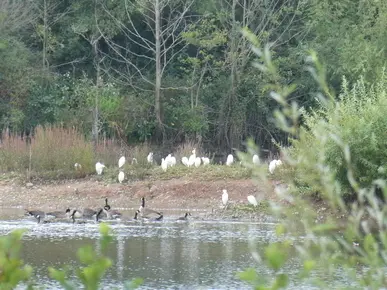
Part of the car park is fenced off as branches have fallen from the White Poplars overhanging it. Another skein of Canada Geese wiffle as they descend to the lake. A Blackcap ticks in a tree of dead leaves. Rose hips are turning to vermilion. Blackthorns are loaded with sloes. More Canada Geese fly in. An Egyptian Goose and at least 20 Little Egrets are on the islands. A few Coot and Mallard swim around them.
Into the meadow. The brambles are being cut back. Despite the rain, the meadow is still pale straw brown. A few Bird’s-foot Trefoil and Autumn Hawkbits are in flower. A Chiffchaff sings much more disjointedly than its spring song. It then turns to its autumn wheep wheep call. Into the Alder plantation. A Wren ticks rapidly as it dashes across the path.
Into the hide. The water is green with algae. A Grey Heron stands tall and motionless on the south side along with a pair of Mute Swans. Washing Canada Geese make a loud splashing sound. A pair of Great Crested Grebes are at the western end. Carrion Crows stalk the scrape. There appears to be no Cormorants here.
Back out into the plantation. Robins sing and a Wren, Nuthatch and Chaffinch call. More Canada Geese wing in. A Spear Thistle is in flower. Back to the meadow. A bright yellow moth, perhaps a male Clouded Buff, Diacrisia sannio, flies across the grass is is off without stopping. A Common Buzzard mews high above Westfield Wood, then folds its wings and plummets down into the trees.
Apples are falling in both orchards. I collect a bag of various windfalls.
Sunday – Leominster – The rain of the last few days is gone, the morning sky is cloudless and the sun beats down. Robins sing, a Blackbird mutters, Wood Pigeons coo and a Chiffchaff calls. Across the Grange. Stubby Yarrow plants are flowering alongside the path. The grass is rapidly greening again. Into Pinsley Road. Blue Tits dart here and there. The Traveller’s Joy or Old Man’s Beard growing on the walls outside the old school is now covered in silky inflorescences. Further down large growths of Ivy are in flower. On to Priory Bridge. The water level in the River Kenwater has risen slightly. Five Mallard are on the water.
Along Mill Street. A large stand of Dogwood by the entrance to the track carries numerous bunches of black berries. The water level in the River Lugg has also risen and the gravel bank is almost completely submerged. Ridgemore Brook is also carrying more water.
The market is much reduced, just two rows. The change in weather and the Bank Holiday car boots are doubtless the reason. Pond Skaters are present above and below Ridgemore Bridge. The clear sky has gone and clouds are building rapidly. The Minster Bells toll the hour then ring the call to prayer.
Home – The weather gets wetter as the day progresses. By late afternoon there is a thunderstorm.
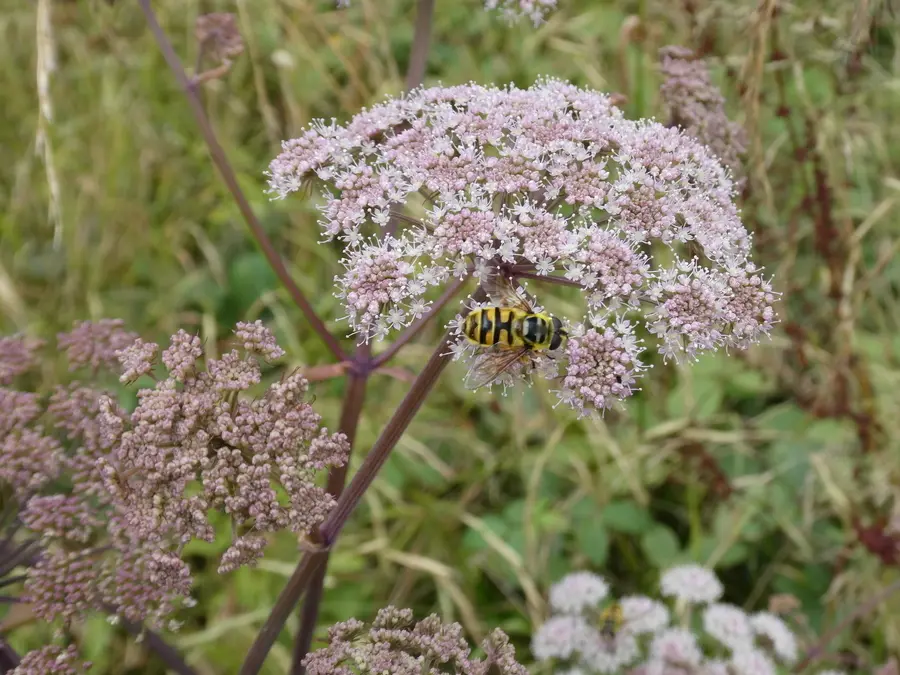 heavy with blackberries. Unbellifers, mainly Ground Elder, are some of the few plants still flowering, most are in seed. Various insects are feeding on them, including the wonderfully named, Batman Hoverfly, Myathropa florea.
 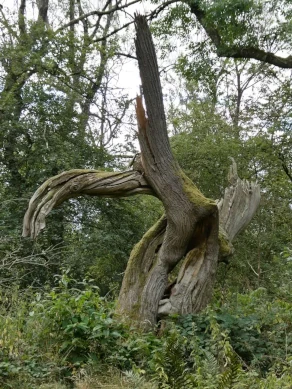 The water level in the pools is not as low as one might expect. Over the bridge to the Beech wood. Young warblers move through the trees, they have a lot of yellow on their underparts so may be Wood Warblers, but juveniles are tricky. The ancient hollow Oak has lost many more branches but still has leaves.
 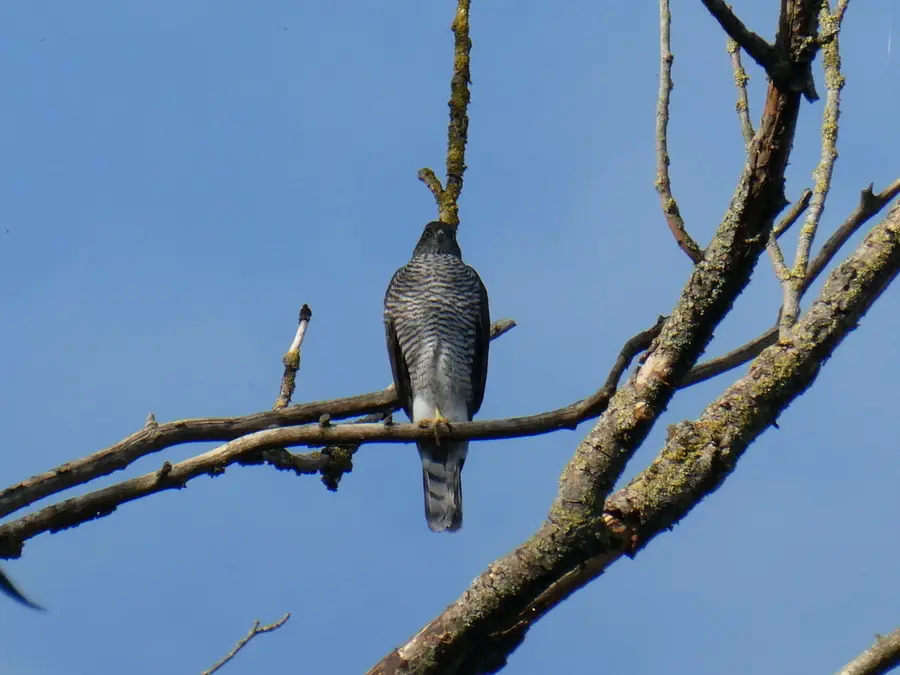 looks unchanged from recent weeks. A couple of fish lay in the flow downstream. A pair of Mallard swim and walk in the shallow water. Over Ridgemoor Bridge. Raptors are screaming behind the trees. One lands in the trees across the River Lugg being harassed by a couple of Magpies. It is difficult to see but looks more Sparrowhawk than Common Buzzard.
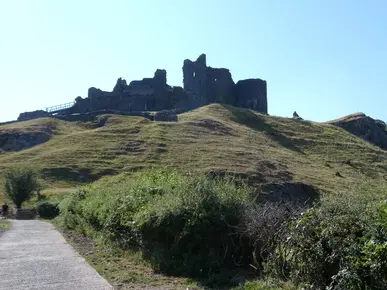 sunshine and getting very hot. This castle is on the western edge of Bannau Brycheiniog, south east of Llandeilo. The rocky outcrop on which the castle is perched is an isolated block of Carboniferous Limestone trapped within two faults which form a part of the Carreg Cennen Disturbance. It is possible there was an Iron Age hill-fort here. The first castle was probably built by Rhys ap Gruffudd, the Lord Rhys in the late 12th century but the first documented reference was in 1248 when mother of Rhys Fachen, the great grandson of the Lord Rhys, Matilda
  de Braose, granted the castle to the Norman English to spite her son, but before the English took possession of it Rhys captured the castle. In 1277 Edward I took the castle. The Welsh seized the castle 1282 but lost it a year later. The castle was patched up and granted to John Giffard, Baron Giffard of Brimpsfield, Gloucestershire. Rhys ap Maredudd retook the castle in 1287 but again soon lost it. Henry IV took ownership of the castle in 1399. in 1403 Owain Glyndŵr attacked Carreg Cennen, but, although inflicting severe damage to the walls, failed to take the castle. It was defended against Glyndŵr’s forces by Sir John Scudamore of Herefordshire. By the mid 15th century, the castle was in the possession of Gruffudd ap Nicolas and Carreg Cennen became a Lancastrian stronghold during the Wars of the Roses. The Yorkist victory at the Battle of Mortimer’s Cross in 1461 forced Gruffudd’s sons to surrender the castle and the Yorkists subsequently set about slighting the castle. Ownership of the castle passed to the Vaughan and Cawdor
  families, and from the 18th century it started to attract artists. J. M. W. Turner painted the castle in 1798. The second Earl Cawdor began an extensive renovation in the 19th century, and in 1932 Carreg Cennen was given to the guardianship of the Office of Works.
 hall stood. Where it seems to have been is a modern building whose windows are tightly shuttered.
 which the settlement was originally named, is dated 1860. A mural of 2002 is on the wall celebrating the centenary of the Lions Club. The bank built in 1908-9, probably by R L Roberts, is closed. Up College Street is a long parade and an arcade on red brick with yellow dressings. The Arcade is on the site of the Cross Inn stables. The stables were demolished in 1897-98 to make way for the arcade, designed by Henry Herbert, which opened in 1899. The shops in the arcade are cafés, vapes, beauty and empty.
 Wednesday – Home – The heat rises day by day. Watering the tomatoes is a daily chore. The courgettes get watered every other day and the greenhouse is checked before watering, the tomatoes there are watered twice a week, other plants every couple of days.
 garden the sun is pretty much completely obscured by a large dark cloud. I get glimpses of a partially covered sun but at its maximum the cloud covers it completely…
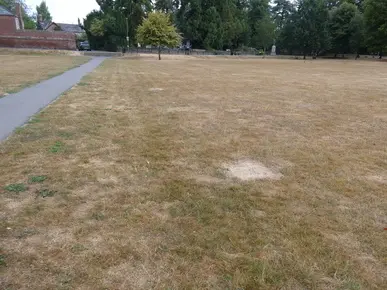 than the rest. It is possible that these are large post holes for the tithe barn that stood on the site. Priory tenants paid their tithes here in corn and other produce. The barn was left standing when most of the priory buildings were demolished by royal decree in 1539. But in 1594 the building was destroyed by fire after reputedly being hit by a comet. One of the biggest timber structures of its era, it burnt for 15 days so thick and so many were its massive oak timbers. Into Pinsley Road. A sizable flock of Blue and Long-tailed Tits dashes between bushes, squeaking excitedly. A juvenile gull squawks on the old school roof. Over Priory Bridge. Blackberries are coming into an end on large bramble patch on the far side of the bridge. A Wren ticks like a machine gun from the hedge.
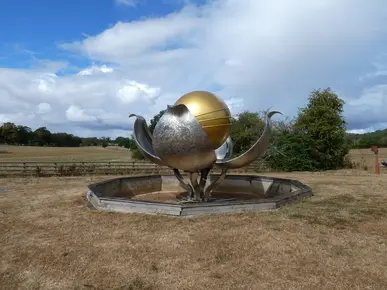 Thursday – Canwood – We visit Canwood Gallery and Sculpture Park in the Woolhope Hills. The site consists of several fields of sculptures and a two storey gallery. The gallery explains its background: “In the 1970s, Herefordshire farmer Stephen Dale faced a life-threatening battle with leukaemia. During his treatment at St Bartholomew’s Hospital in London, he found solace and inspiration in the art at the Tate Gallery, particularly Carl Andre’s controversial brick installation. This profound experience ignited Stephen’s passion for art and his desire to give back. Upon retirement, he established Canwood Gallery to share the inspiring and healing qualities of art with others.” The gallery is in rollings hills of sadly yellow, desiccated fields.
 Rain had also been promised over the past week but we have seen very little. Across the car park. Robins, Wood Pigeons, Jackdaws, Collared Doves and Dunnocks call and sing. Down to Priory Bridge. The River Kenwater looks unchanged, clear and shallow. Gnats dance above the water in the shafts of sunlight. Gulls yelp overhead.
 croaks in the field bordering the village.