Saturday – Home – Last night was the Flower Moon and a full micromoon. It is an exceptionally distant moon, in a far part of its orbit from Earth.
The day starts bright but slowly clouds over. A Great Tit calls insistently and a Blackbird sings powerfully from our trees. It is not Spotty, is another trying to take over the territory? There are more male Blackbirds in the garden than a month ago. There also seems to be more Wood Pigeons.
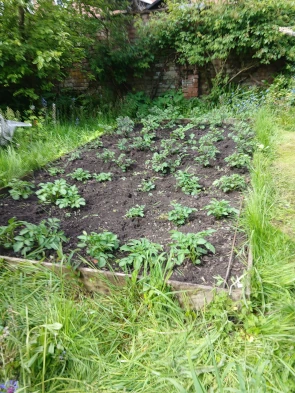
The courgette sowings in the bathroom seem slow so more are sown as back-ups. The Charlotte potatoes have emerged, the Red Duke of Yorks are getting larger now. The tomatoes in the greenhouse still seem spindly.
In the late afternoon, rain starts to fall. The Blackbird song still rings out across the garden. Strangely, there is not a single Jackdaw insight.
Sunday – Leominster – Rain fell overnight but the morning is bright with scattered high cloud. Wood Pigeons are on the roof tops but again there seems to be a near absence of Jackdaws, just a pair at the bottom of the road. A noisy juvenile Blackbird calls for its parent despite being able to feed itself. It has been six weeks since I last came down here. I had been heading for the railway bridge but had forgotten that the path is closed for possibly up to three months. Into Pinsley Mill. Wood Pigeons, a Chiffchaff, Wren and Blue Tit are in good voice across the other side of the railway. May, Hawthorn blossom, is just beginning to fade whilst Elderflowers are beginning to open.
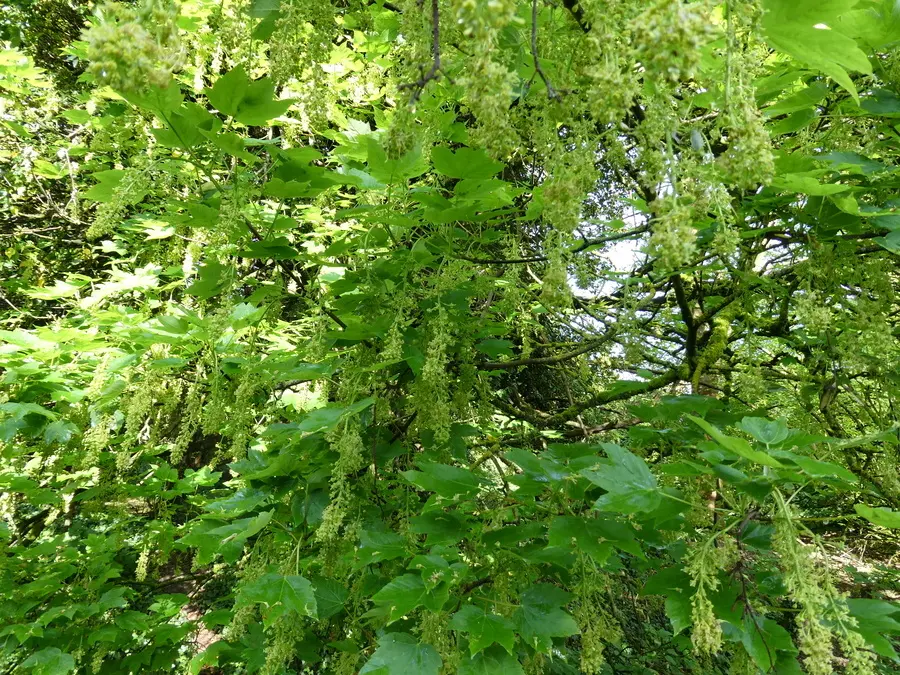
Into the Millennium orchard. Blossom is appearing on many of the apple trees. However the flowers on the Tom Putt have already come and gone. A Chaffinch flies up into the trees. White Dead-nettles and Cow Parsley are in flower. A bumblebee is visiting the former. A Blackbird is bathing in the rain soaked grass. The Minster bells ring out the hour and the call to prayer which is rather marred by a car alarm. Flowers hanging from Field Maple trees. Access to the Wild Garlic patch is difficult as the normal paths and now blocked by huge swathes of Stinging Nettles. The garlic is now in flower. Guelder Rose is coming into flower beside the railway. A Mistle Thrush flies over, a Blackcap sings, a Chiffchaff calls and another Blackcap ticks.
Into the Peace Garden. The water level in the River Kenwater is much lower than my last visit. A Bird Cherry and a Dogwood are in flower. Red Campion are being swamped by Stinging Nettles . A pair of Magpies stalk the churchyard. A rabbit scurries off to the undergrowth. There are dozens of Grey Squirrels under the trees. A Swift, first of the year, is high above the Minster. The yoga class is taking place on the Grange again.
Friday – Home – To say the weather is changeable is an understatement. The day started grey, brightened, darkened, rained, bright sunshine, darkened and rained again. Half a dozen lettuces from the greenhouse are planted out into one of the beds, protected with rings of yoghurt pots and a wire frame. The potato plants are progressing well although the bed is getting overgrown with other plants, weeding is urgently needed. In the greenhouse courgette seedlings are doing well, broad beans are bursting through the surface of their pots, a few of the resown beetroot have come through, hopefully a lot more will follow.
A Great Tit has been flying between the seed feeder and the nest box on the summerhouse. However, I cannot hear any sounds from the box. Young Robins are around the garden, acting stupidly as usual.
Sunday – Leominster – A grey, breezy morning. A Dunnock sings at the top of a flowering Wisteria in the car park. Across the Grange and into Pinsley Road. Red Valerian is in flower on the old garden walls. House Sparrows chirrup and another Dunnock is in song. Down to the old school, now the Community Centre. White Lilac blossoms in the rectory garden. More House Sparrows call from the centre guttering. Across the car park, formerly site of the town gasometers. Over Priory Bridge. The River Kenwater is fairly low and slightly cloudy.
Along Paradise Walk. Brambles are coming into blossom. A Chiffchaff calls from the other side of the river. A Wren chatters from the top of a dead umbellifer stalk. The fence between the path and river has been renewed and a locked gate now prevents access to where the shelter stood before it collapsed into ruin. Over Paradise Bridge, where a Blackbird pinks an alarm. Herb Robert and Garlic Mustard are in flower. Along Mill Street to Ridgemoor Bridge. The water level in the River Lugg is low.
Along the track to the bridge over Ridgemoor Brook. The large tent beside the bridge has been replaced by a wooden structure. Into the boot market. There is, of course, much of the same stuff as every year. I was not going to grow leeks this year but a pot of seedlings for £1 tempts me. The stallholder tells me he had a lot of tomato plants earlier but some East Europeans bought the lot. “It’s because they eat properly”, he reckons, “not like our youngsters who just want McDonalds”. A Skylark sings high above the cereal crop at the end of the market and a Mallard flies over.
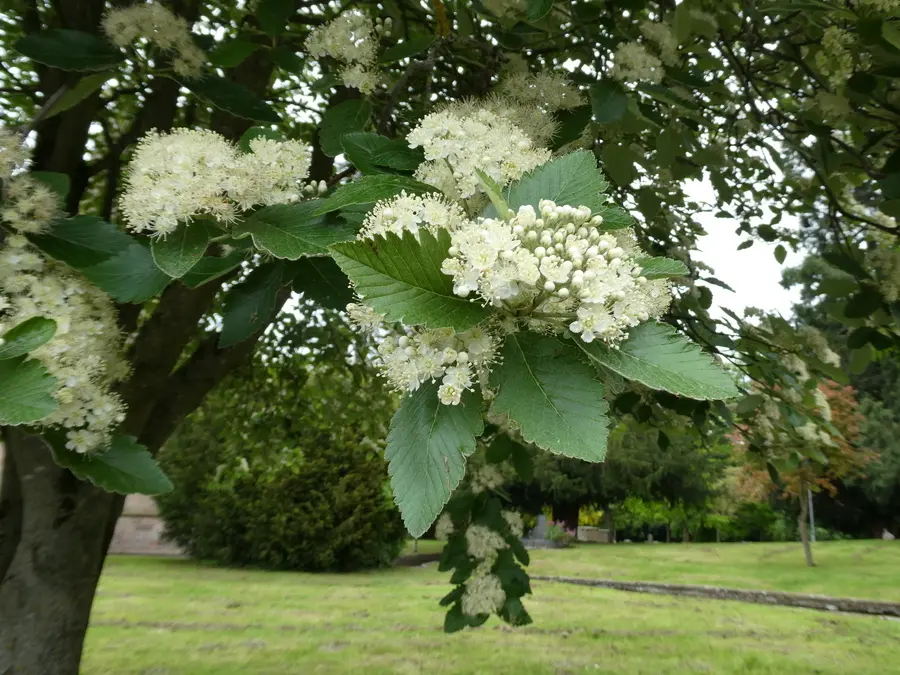
Back along Mill Street and into Paradise Walk. Bell practice is underway at the Minster. Up The Priory and into the churchyard. Laburnum, Whitebeam and Rowan are in blossom. Over The Grange and into the car park again. Swifts in pairs glide overhead.
Wednesday – Home – Another day of heavy showers and sunshine. Cutting the grass is a forlorn hope as the showers soak the grass as soon as it dries. A couple of rows of Red Duke of York potatoes are earthed up after weeding. A second sowing of peas has finally emerged. In the greenhouse, the leek seedling are pricked out into a trough. Cucumber seedlings are potted on; they will go into the large, final pots in a few weeks. I will start planting out the tomatoes in troughs, hanging baskets and into the greenhouse ground in the near future. Dwarf French beans and a second sowing of broad beans have sprouted. The broad beans out in the bed are coming to the end of flowering and hopefully have been well fertilised by bees.
There are a decent number of cherries and greengages on the trees. It is hard to see if the Herefordshire Russet apple has a good crop in the making, but the Christmas Pippin seems to have no fruit at all! Both raspberries and strawberries look hopeful. The first asparagus has pushed through the soil.
A Coal Tit is on the seed feeder. They are regular but infrequent visitors that may be nesting nearby. A Great Tit is still visiting the summerhouse nest-box and fledgling Great Tit is by the feeders. There is a Blackbird with white spots around its head but I am not convinced it is Spotty, our regular, possibly another of the same family. There are too many Grey Squirrels in the garden at the moment!
Saturday – Home – The first tomato plants are put into the bed in the greenhouse. Others go into hanging baskets, two of which go into the cold frame. Courgette plants are also put here. The troughs which will host the bush tomatoes are filled with compost and put in their place by the summerhouse. Yesterday the grass around the washing line and the lawn is cut. It is difficult as it is very lush and damp, so jams the mower frequently. The “meadow” area is now covered in plants including two large patches of Yellow Rattle. However, there may be far too many Black Knapweeds.
Sunday – Leominster – Up to The Broad on the Old Ludlow Road and pick up three bags of horse manure. The town seems to be full of road works! Back home for breakfast.
A cool, overcast morning. Across The Grange and into Pinsley Road. A Blackbird sings on the other side of the wall. A short burst of song then he looks around to see if there is any response, which there is not. Past the old school and into the car park. House sparrows chatter in the hedgerows. Dunnock sings from the top of a conifer. Wood pigeons call from every direction.
At the top of the car park there is a gravel track running along this side the wall at the foot of the school playground. It would seem to be the course of the old Pinsley Brook now filled in. Stones at the foot of the playground wall and a modern wall by the car park look they have some age. A footbridge once crossed here. Into the Priory where a young Robin, just getting its red breast, is on a gate.
Over the River Kenwater. The water looks clearer than last week. Along Paradise Walk. A Chiffchaff calls. Into Mill Street and over the railway. Dozens of Swifts are overhead. Over Ridgemoor Bridge. Below the River Lugg is clear but the water level is very low. Along the track beside the Lugg. Hedge Mustard and Sow Thistle grow high at the top of the riverbank.
The market is much smaller this week. It is the usual mixture of dreadful ornaments, toys and games for children, cast off clothing and a very large number of tomato plants. Back along Mill Street to the car park. Bell practice at the Priory is underway. Swifts are in the sky high above, often in pairs chasing one another. The car park of the now closed factory shop is fuller than it has ever been, people taking advantage of free parking.
Home – Dodging showers. I continue to earth up the Red Duke of Yorks. There are two large clumps of leaves in the bed. Kay reckons they look like parsnips. It seems possible as they were grown here last year. However, I am surprised to dig up two large parsnips in what looks like very good condition. We shall see when I prepare them for dinner!
Also in the soil here is a red-brown chrysalis. I am not sure whether it is a moth or cranefly, I suspect the latter. Either way it ends up in one of the chickens.
Monday – Home – The parsnips were not a great success. Their cores were woody and the rest of the flesh was rather watering. Still, they were free! We are also continuing to eat the chard which are now large plants and beginning to bolt. Unfortunately, I only have a couple of seedlings to replace them. Germination has been poor for both of us this year. We bought some commercial seed compost which was pretty dreadful stuff but we thought by drying it (it was saturated) and adding perlite it should be useable. But it seems the only reason why we have had so poor results.
I finish clearing the potato bed. There is a large patch of Enchanter’s Nightshade, Circaea lutetiana. The botanical name comes from Circe being the sorceress of Homer’s Odyssey, and Lutetia referencing an old Latin name for Paris, the “Witch City”. It is a member of the Primrose family, not the Nightshade family, to which potatoes belong. It is noticeable that the potato plants by this patch are smaller than the others. Although I can find no reference to this, I wonder if it suppresses the growth of other plants? I leave earthing up the Charlotte potatoes for a week more as they are smaller than the Red Duke of Yorks.
A trench is dug through each of the squash beds and the base lined with some of the manure purchased yesterday. I will leave the courgette seedlings in the cold frame for a while longer before planting out. I am a couple short but some more have been sown and are in the bathroom.
By midday, rain falls.
Wednesday – Home – The strimmer starts with surprising ease after storage throughout the winter. The Stinging Nettle patch is reduced in size, it always spreads whenever it gets the chance. The edge of the paths are cut as are some of the long grass that has grown up along the the beds. There is much more to do bringing the grasses under control but that will do for now. The courgette plants go into the beds. There is room for more but there are only two on the way.
The calls of young birds, a distinctive sibilant chirrup, comes from the trees. Various flowers, including roses, are blooming around the garden. Carrion Crows pass over, cawing harshly. Swifts scream high above.
Thursday – Home – After a dull start, the afternoon is sunny and warm. Indeed, it is warm enough to need the application of plenty of water on the lettuces and in the greenhouse. The broad beans have flowered well and hopefully have been fertilised and the beans will appear soon. Yet more beetroot have been sown – I will get a crop!
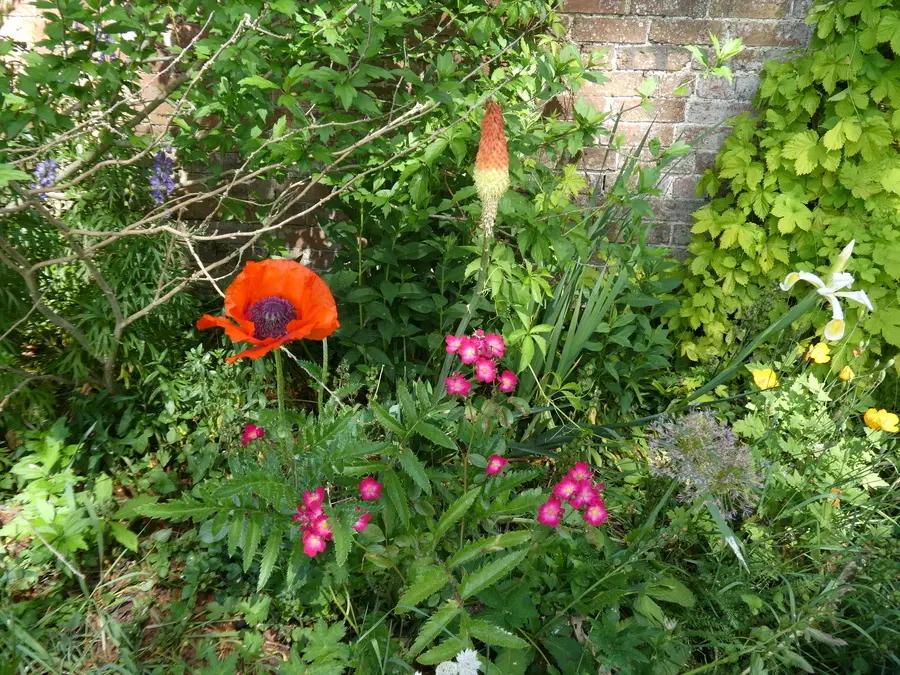
The flower beds are blooming and whilst we usually have a reasonable display after the Spring extravagance of Bluebells, daffodils and tulips, this year flower heads are appearing that were missing in recent years or, we assumed, had disappeared altogether. A Red-hot Poker, the wonderfully called Kniphofia, has appeared for the first time despite being introduced to the bed some years ago. This flower reminds us of the time in the pub quiz in Barnsley when Dennis tried to read out the question set by his partner, “What is the common name for a Kniphofia?” He was reduced to cursing poor Stephanie and the pub was in hysterical laughter! There are a good number of Hollyhocks yet to flower, a beautiful, delicate yellow Aquilegia that certainly did not flower last year and some old faithfuls like the splendid stands of Delphiniums.
Sunday – Clarach Bay, Ceredigion – The bay lies at the mouth of the Afon Clarach, which flows through a valley on the other side of Constitution Hill from Aberystwyth. The sides of the valley are filled with large caravan sites.
A few high wispy clouds do not stop the sun blazing down and warming up the air rapidly. Through the holiday park down to the beach. The hill above looks strange where a large number of the conifers towards the headland of all died, understandably as they are facing the prevailing winds and salt-laden air. On the top of headland is a revolving radar. Noisy Rooks fly over, they are common around the bay. There is a small gathering of Herring Gulls on the beach and just a couple out on the sea which reflects the brilliant blue of the sky.
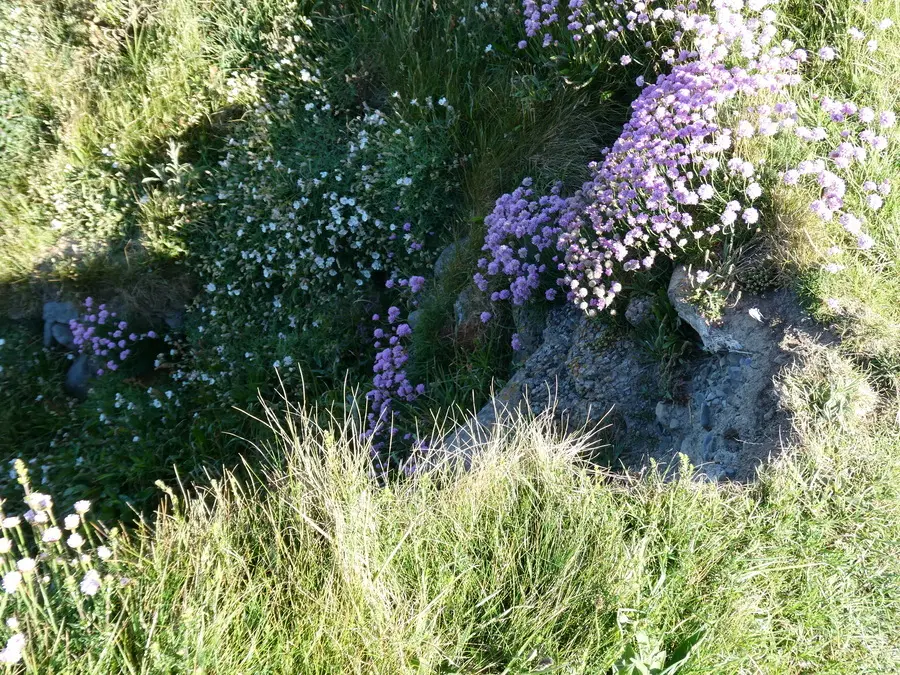
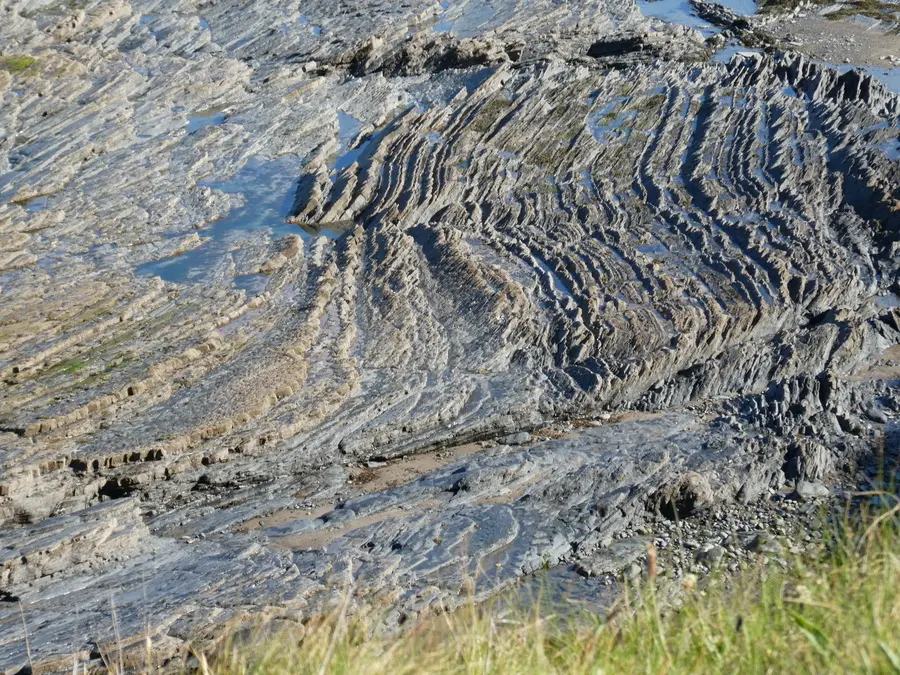
Up the coastal path. Pink Thrift is growing on the path banks along with Sea Campion and Sea Milkwort. Further on is a large clump of Red Valerian and dense patches of Thrift tumbling down deep gullies in the cliffs. As the path rises higher, the Thrift is more stunted and ground-hugging Bird’s Foot Trefoil is frequent. Kidney Vetch has almost finished flowering. A Painted Lady butterfly suns itself on the bare ground. Oystercatchers call from the rocks below. These rocks are Silurian Aberystwyth Grits Group sandstone and mudstone, the layers twisted and deformed often into the vertical. Here on the top of the cliffs, the sandstone is full of water-smoothed stones and boulders.
Home – The day is heating up. The thermometer outside the backdoor is reading 34°C, although it is in direct sunlight. I watered well before we headed to Wales, so everything seems happy. Six of the Burbank Bush tomatoes go into the troughs by the summerhouse. The cucumbers are planted out into large pots in the greenhouse. Courgettes were planted out last Friday and seem to have taken well. They did not germinate well and I purchased another couple at the Plant Fair on Saturday.
Monday – Home – The night was warm, making sleep difficult. Now the day is heating up. Half a dozen lettuce seedlings are planted out. The courgettes from the Plant Fair also go into the bed. A second sowing of broad beans are planted out. Everything is watered thoroughly. The spaces for tomatoes in the greenhouse are filled, some with some rather small seedlings (which I forgot to label) but they will probably come on. Another trough is filled with compost from the big bin and another three Burbank Bush tomatoes go in and the trough placed by the summerhouse.
By mid-afternoon it is really hot. The thermometer by the back door is now reading 37.5°C – 100°F! I half think about clearing the bean bed as the dwarf French beans need transplanting but it is simply too hot.
Tuesday – Home – The highest May temperature of 34.8°C was recorded at Kew Gardens yesterday and it is predicted that this record will be beaten today. By mid-afternoon, the thermometer by the back door is at 40°C. And indeed the temperature reaches 35.1°C at Kew Gardens, a new May high.
In the morning I clear the bean bed. The soil is baked hard. It has been dug and manured several times for potatoes over the years but still digs out in large lumps. The dwarf French beans are planted out. In the afternoon, it is sweltering in the greenhouse as I sow climbing French beans, runner beans and a tray of lettuce. I water in the greenhouse, a few things are looking a bit desperate. I also water the second sowing of broad beans as they too are looking very unhappy.
Young birds are still calling around the garden, demanding feeding. Swifts are flying low over the roofs. Jackdaws are their usual noisy selves on the roof tops. Canada Geese flew through in the early hours of the morning, yelping as usual.
Wednesday – Home – Over thirty Jackdaws are in what can only be called a frenzy around a chimney pot several doors down the street. They fly around chacking loudly with one bird standing on the pot.
The morning starts to heat up, but there is a bit of a breeze. However, mowing the grass still leaves me soaked in sweat. Many more areas are being left uncut now. This provides more environments for wildlife and unless we need to traverse the area, why cut it!
Watering is now a regular evening job. Most of the plants recently put out in the beds are thriving. A couple of tomatoes in the greenhouse have failed. Returning to the house, I notice a young Blackbird behind the summerhouse. Its back is turning black but it still has a speckled breast. It looks at me seemingly unsure of what to do next. It flaps its wings rather frantically and gets on top of the sacks of green waste. I leave it alone hoping it does not fall into one.
Thursday – Home – A mighty thunderstorm rolls over heading north in the early hours. It takes more than half an hour to pass. Sheets of lightning, with just a couple of long arcs, turn the sky white. Several bursts of heavy rain beat down. However, it does little to wet the parched soil.
The morning is cooler than the last couple of days. By midday the temperature outside the back door is 25°C, lower but still very warm. To increase my overall heating, I heave the water butt off its stand by the chicken run. It has been steadily tipping backwards. Using a slab and plank, the ground is levelled and the butt replaced.
The new trough of tomatoes by the summerhouse are staked. Some more dwarf French beans are sown. By mid-afternoon the temperature is nearly 30°C. Some chilli peppers are potted, a couple more tomatoes go into the greenhouse bed and the rest are tied up to their sticks and the side shoots pinched out.
Friday – Leominster – A slightly cooler day as the high pressure area that was trapping the hot air and causing the record breaking heat is now drifting away to the South East. There is a bit of a breeze and a few clouds drifting over. Access to the railway foot bridge still closed so I am unable to get to the river. Into Pinsley Mill. A Chiffchaff calls from the other side of the railway. Elderflowers are in full bloom now. A Whitethroat sings along with another Chiffchaff, a Wren and a Willow Warbler. Dunnocks are on the fence on this side of the railway. A Class 67 diesel pushes a train of the old mainline carriages, now all painted in TfW colours.
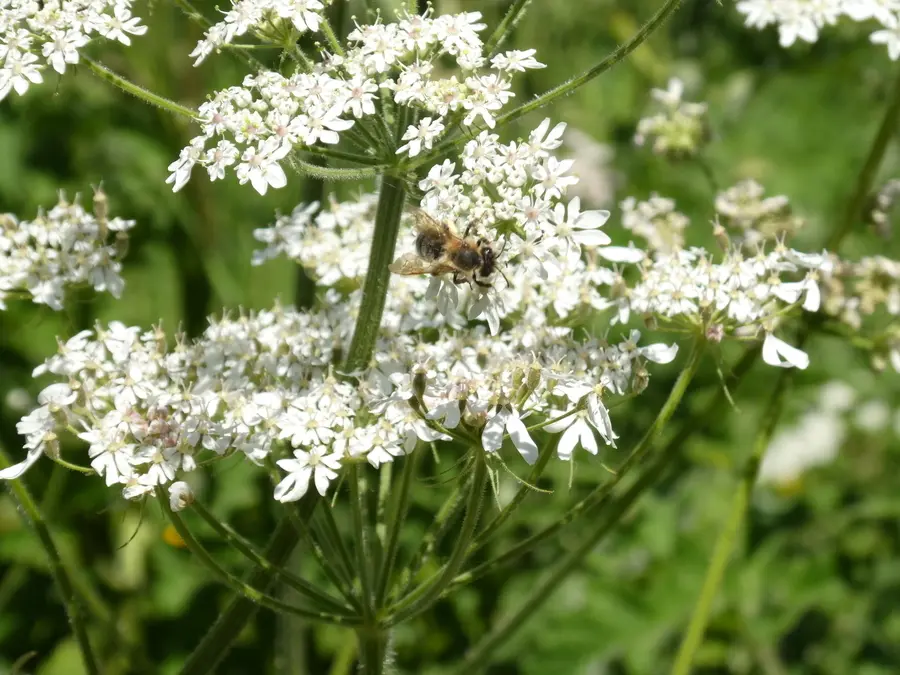
Into the Millennium Orchard. A Blackcap sings briefly. Another train heads south but this is still in the old colours. Bees are busy on the umbellifer heads. Calls of a young bird come from the hedge row beside the track. Webs from Spindle Ermine Moth caterpillars, now departed, are on a Spindle tree. Dark-winged Banded Agrion damselflies flit from flower to flower on a large Dogwood. There is the constant hum of bees. Blackcaps sing from the track-side hedgerow and the foot of the churchyard. The water level in the River Kenwater is very low. It flows crystal clear and slowly.
Into the churchyard. The trees that came down in a storm a couple of years ago on the northern side of the churchyard have finally been sawn up and cleared. There are surprisingly few people on the Grange.
Saturday – Home – Another very warm day, the temperature close to 30°C. The rest of the potato plants are earthed up. The bed intended for roots has been left since March and is now weed covered. These are removed. I will try another sowing of beetroot and carrots tomorrow. The automatic window opener in the greenhouse is refixed after it came adrift. There is a tangle of dead rose branches behind the greenhouse and some of these are removed. Stinging Nettles and Brambles are removed from various parts of the garden. Duckweed is netted off the pond but it will quickly return and the pond looks like it has a deep layer of rotting leaves in it. The ground is very dry, the chicken run water butts are almost empty as are two of the main ones, we need rain!
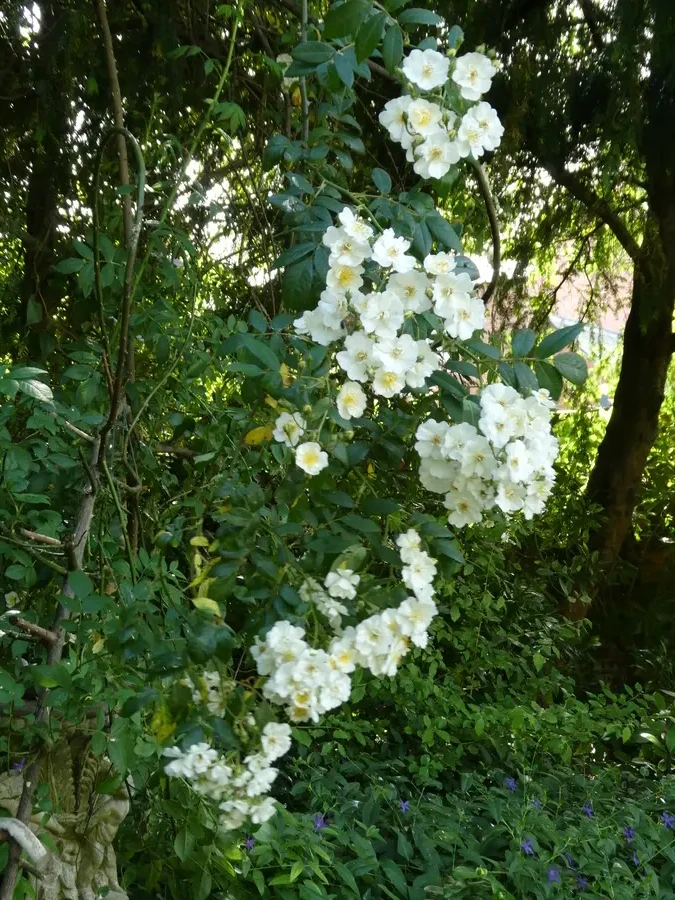
The rambling roses are coming into flower and are glorious. The Kniphofia is turning red behind a beautiful rose, “Poppy Rose”. Delphiniums, clematis, oriental poppies and and many more are in the main bed. Hidden away by the chicken run is a Deutzia x hybrida “Mont Rose”, covered in star-shaped rose-pink and white flowers. The garden is looking better for this time of year than ever before. The large Bramble in the bottom corner is covered in flowers, hopefully there will be a good blackberry crop this year.
Sunday – Leominster – The morning is cooler with a lot of cloud and a brisk westerly wind. Across the Grange where Blackbirds are searching the grass for food. Down to Priory Bridge. The River Kenwater is low and clear. Along Paradise Walk. A large branch has grounded on the riverbed. Magpies chatter in the trees. Over Ridgemoor Bridge. Pond Skaters have yet to emerge on the shallow River Lugg below.
The market is large and busy. Skylarks sing overhead. The commercial plant sellers are missing this week which is something of a nuisance. However there are hundreds of tomato plants for sale and a large number of courgettes too.
Back to Ridgemore Bridge. A Wren is singing explosively in the trees on the river bank. A Chiffchaff seeks insects in the leaves before disappearing into the undergrowth. A Grey Wagtail flies downstream. Back to the Priory Bridge. Although clear, there appears to be nothing alive in the river below, even the long strands of water-weed have gone.
Home – Yet another row of beetroot is sown into the dry soil. Hopefully, rain will soon come and water them in. There are still the beetroot seedlings in the greenhouse but it would be better transplanting them into damp ground.
 its parent despite being able to feed itself. It has been six weeks since I last came down here. I had been heading for the railway bridge but had forgotten that the path is closed for possibly up to three months. Into Pinsley Mill. Wood Pigeons, a Chiffchaff, Wren and Blue Tit are in good voice across the other side of the railway. May, Hawthorn blossom, is just beginning to fade whilst Elderflowers are beginning to open.
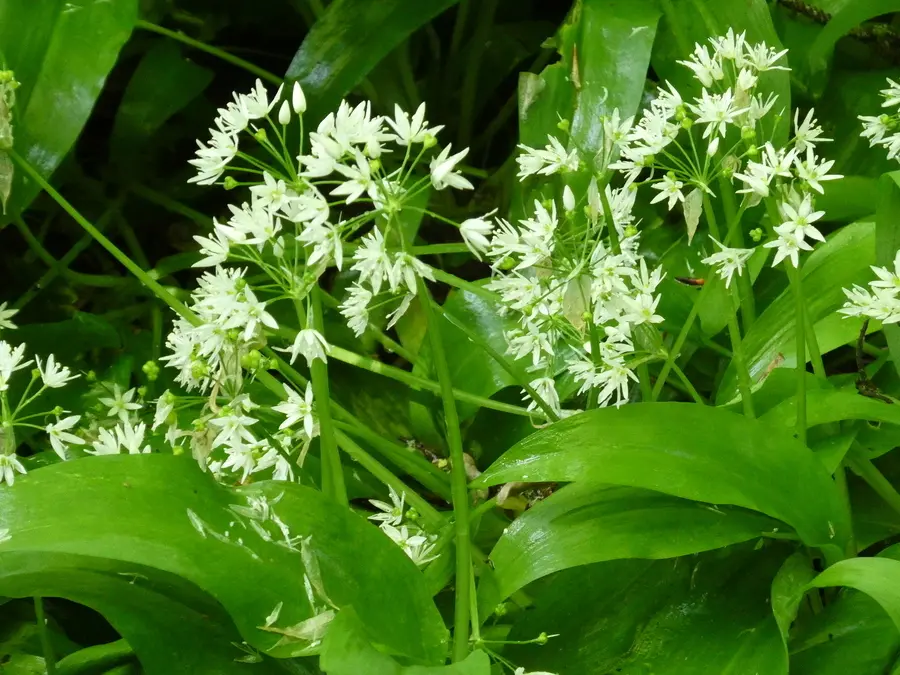 Into the Millennium orchard. Blossom is appearing on many of the apple trees. However the flowers on the Tom Putt have already come and gone. A Chaffinch flies up into the trees. White Dead-nettles and Cow Parsley are in flower. A bumblebee is visiting the former. A Blackbird is bathing in the rain soaked grass. The Minster bells ring out the hour and the call to prayer which is rather marred by a car alarm. Flowers hanging from Field Maple trees. Access to the Wild Garlic patch is difficult as the normal paths and now blocked by huge swathes of Stinging Nettles. The garlic is now in flower. Guelder Rose is coming into flower beside the railway. A Mistle Thrush flies over, a Blackcap sings, a Chiffchaff calls and another Blackcap ticks.
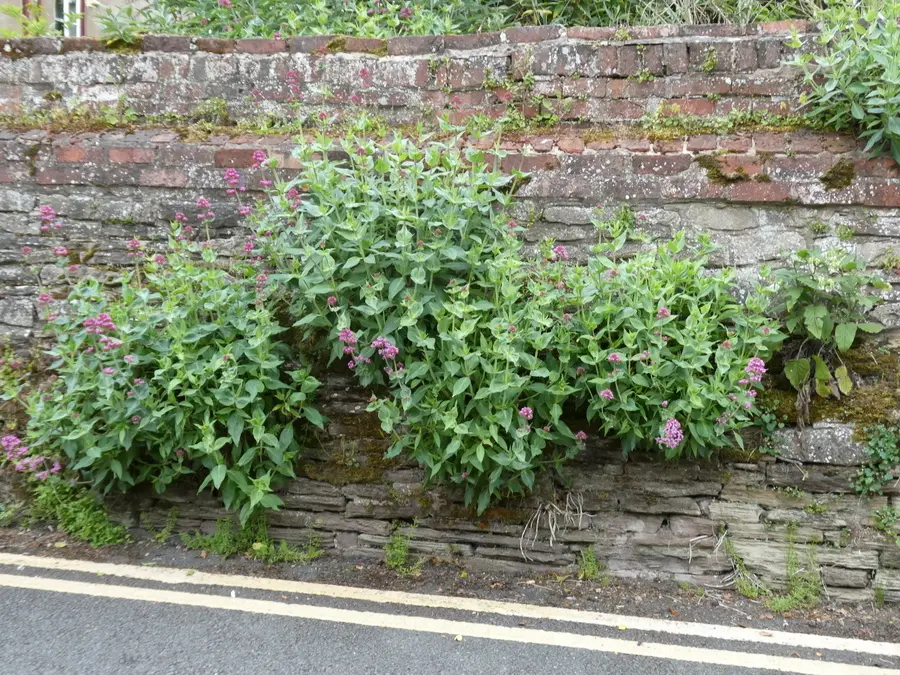 A grey, breezy morning. A Dunnock sings at the top of a flowering Wisteria in the car park. Across the Grange and into Pinsley Road. Red Valerian is in flower on the old garden walls. House Sparrows chirrup and another Dunnock is in song. Down to the old school, now the Community Centre. White Lilac blossoms in the rectory garden. More House Sparrows call from the centre guttering. Across the car park, formerly site of the town gasometers. Over Priory Bridge. The River Kenwater is fairly low and slightly cloudy.
 Along Paradise Walk. Brambles are coming into blossom. A Chiffchaff calls from the other side of the river. A Wren chatters from the top of a dead umbellifer stalk. The fence between the path and river has been renewed and a locked gate now prevents access to where the shelter stood before it collapsed into ruin. Over Paradise Bridge, where a Blackbird pinks an alarm. Herb Robert and Garlic Mustard are in flower. Along Mill Street to Ridgemoor Bridge. The water level in the River Lugg is low.
 only have a couple of seedlings to replace them. Germination has been poor for both of us this year. We bought some commercial seed compost which was pretty dreadful stuff but we thought by drying it (it was saturated) and adding perlite it should be useable. But it seems the only reason why we have had so poor results.
 a large number of the conifers towards the headland of all died, understandably as they are facing the prevailing winds and salt-laden air. On the top of headland is a revolving radar. Noisy Rooks fly over, they are common around
  the bay. There is a small gathering of Herring Gulls on the beach and just a couple out on the sea which reflects the brilliant blue of the sky.
 foot bridge still closed so I am unable to get to the river. Into Pinsley Mill. A Chiffchaff calls from the other side of the railway. Elderflowers are in full bloom now. A Whitethroat sings along with another Chiffchaff, a Wren and a Willow Warbler. Dunnocks are on the fence on this side of the railway. A Class 67 diesel pushes a train of the old mainline carriages, now all painted in TfW colours.
 Saturday – Home – Another very warm day, the temperature close to 30°C. The rest of the potato plants are earthed up. The bed intended for roots has been left since March and is now weed covered. These are removed. I will try another sowing of beetroot and carrots tomorrow. The automatic window opener in the
  greenhouse is refixed after it came adrift. There is a tangle of dead rose branches behind the greenhouse and some of these are removed. Stinging Nettles and Brambles are removed from various parts of the garden. Duckweed is netted off the pond but it will quickly return and the pond looks like it has a deep layer of rotting leaves in it. The ground is very dry, the chicken run water butts are almost empty as are two of the main ones, we need rain!